
Agents & workflows / PROPOSED CONCEPT
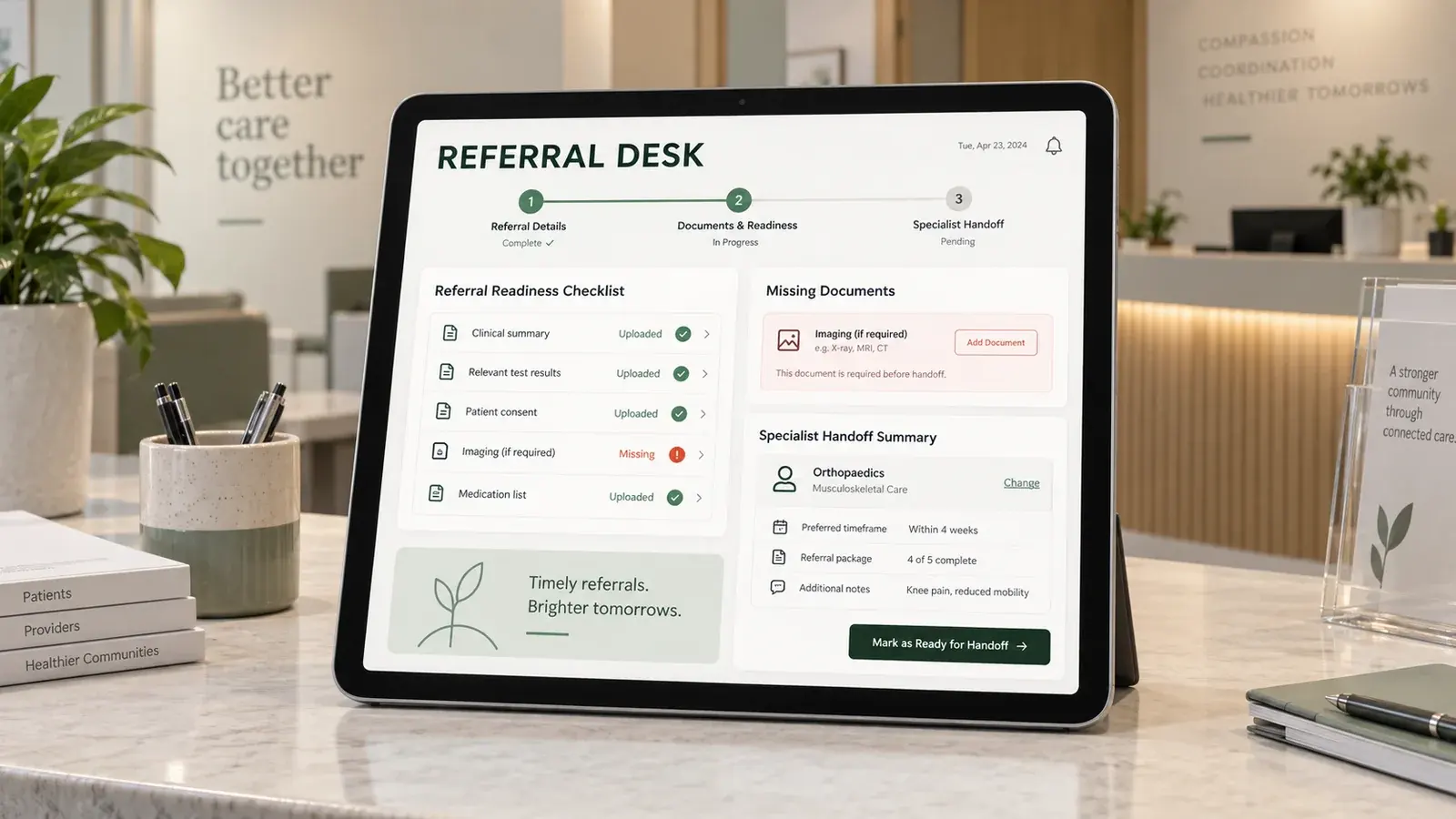
Referral readiness desk.
Referral completeness checks. Source-linked missing items.
The opportunity
A real need.
A considered response.
A referral can arrive without the documents or administrative details a receiving clinic needs. Staff need to see what is missing and who can resolve it without asking patients to repeat the entire process.
DESIGNED AROUND
Clinic referral coordinators and specialist administration teams.
What would this look like for you?
Ask the architect to connect this concept to your systems, or challenge its assumptions.
The experience
What this could make possible.
Source-linked missing items
Coordinator handoff queue
Reviewed follow-up drafts
01
Read permitted referral records
→02
Check local intake requirements
→03
List missing administrative items
→04
Route to a coordinator
Under the surface
The engineering
behind the experience.
Architecture is a starting hypothesis. Discovery and representative tests decide what belongs in the first build.
POTENTIAL CONNECTIONSEHR referral moduleSecure document storeClinic intake checklist
01Architecture to explore+
- FHIR-compatible record adapters where available
- Document extraction with source spans
- Clinic-specific checklist rules
- Access logging and role-scoped queues
02Integration dependencies+
EHR referral module, Secure document store, Clinic intake checklist. Confirm access, data ownership, update frequency and failure behaviour during discovery.
03Validation and human control+
Test missed documents, false completeness and wrong receiving-clinic assumptions. Administrative completeness only; no diagnosis, clinical prioritisation or autonomous patient outreach.
A useful first step
Start small.
Learn something real.
One specialty and de-identified historical referrals reviewed by the administration team.
Evidence to look for
Test missed documents, false completeness and wrong receiving-clinic assumptions.
A boundary to design for
Administrative completeness only; no diagnosis, clinical prioritisation or autonomous patient outreach.
Proposed scope, not a delivery commitment. Data, permissions, operational constraints and sector requirements need review before implementation.
Connected capabilities
AI Agents & Workflow AutomationKnowledge & Document AIBackend, API & Integration EngineeringResearch behind the direction
American Medical AssociationPrior authorization research and reports ↗AnthropicBuilding effective agents ↗AnthropicDemystifying evals for AI agents ↗These sources inform technical possibilities. They do not demonstrate a Tomatrix deployment or endorse this proposed product.
From possibility to a conversation
Make this
your starting point.
Add a little context. Preview a practical brief, then keep it for a conversation with Tomatrix.
Built locally from this concept. No AI service is called and nothing is submitted. Please leave out confidential information.
Preview your concept brief
PRODUCT EXPLORATION: Referral readiness desk

Status: Proposed concept — scope and feasibility to be agreed.

Our context:
To be discussed.

Who this could help:
Clinic referral coordinators and specialist administration teams.

A useful first pilot:
One specialty and de-identified historical referrals reviewed by the administration team.

What to evaluate:
Test missed documents, false completeness and wrong receiving-clinic assumptions.

Important boundary:
Administrative completeness only; no diagnosis, clinical prioritisation or autonomous patient outreach.

Integrations to explore:
EHR referral module, Secure document store, Clinic intake checklist

Concept reference: /products/referral-readiness
Keep exploring
Related possibilities.
PROPOSED CONCEPT
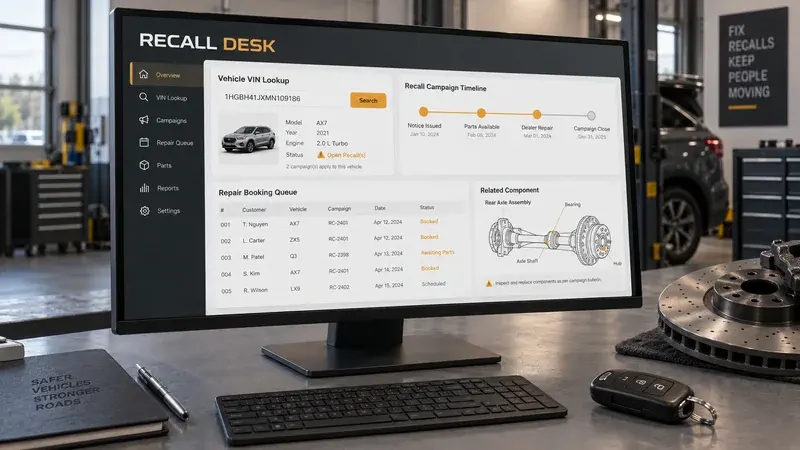
Recall operations agent ↗
VIN-linked campaign evidence. Repair readiness queue.
PROPOSED CONCEPT
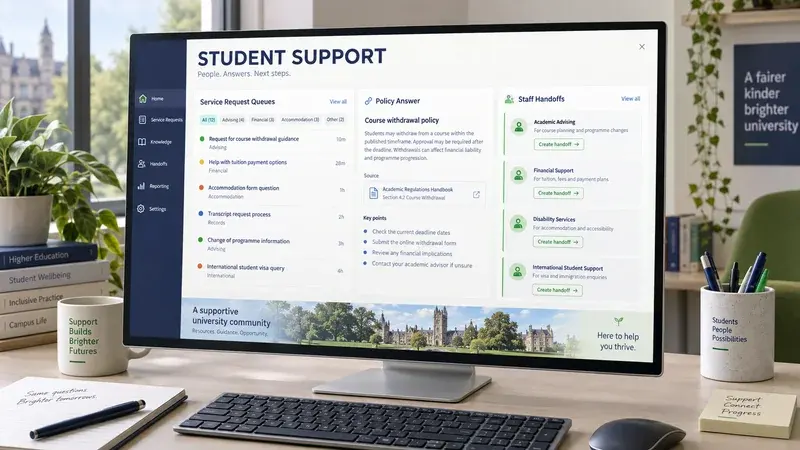
Student support navigator ↗
Policy-grounded guidance. Service request routing.
PROPOSED CONCEPT
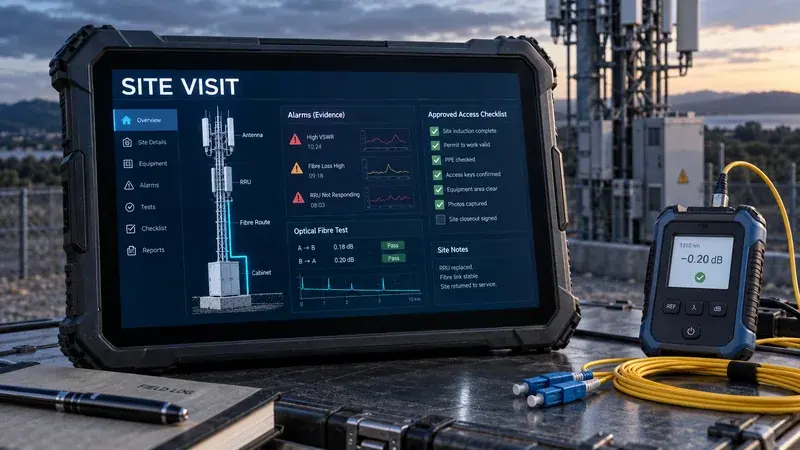
Network field visit planner ↗
Site visit readiness. Alarm-to-asset context.